
It’s safe to say that fairly few winemakers go about trying to make bad wine (Tassenberg, La Villageoise and Est! Est!! Est!!!, I’m looking at you). However, even when the producer is able to deliver a perfectly good bottle of wine – things can go pear-shaped fairly easily in several ways before it’s opened at the table.
Strictly speaking, wines should be kept at around 12º C in order to retain their quality while in storage. Over the past two weeks, Europe has recorded some of the highest temperatures in history. If you haven’t made the connection yet, I’m willing to bet that a few otherwise brilliant wines have been spoilt due to heat damage.
One such unfortunate bottle has been one of my favourites — a 2016 Netrroir Soave: a gift from a friend that I’d been seriously looking forward to opening. Upon examining her just yesterday, I was devastated to find her in this form. However, as goes the adage: ‘those who can (be drunk), do; those who can’t, teach’.
There are several methods to verify if your wine has been subject to heat damage.
If you’re dealing with a white wine, one telltale sign is the colouring.
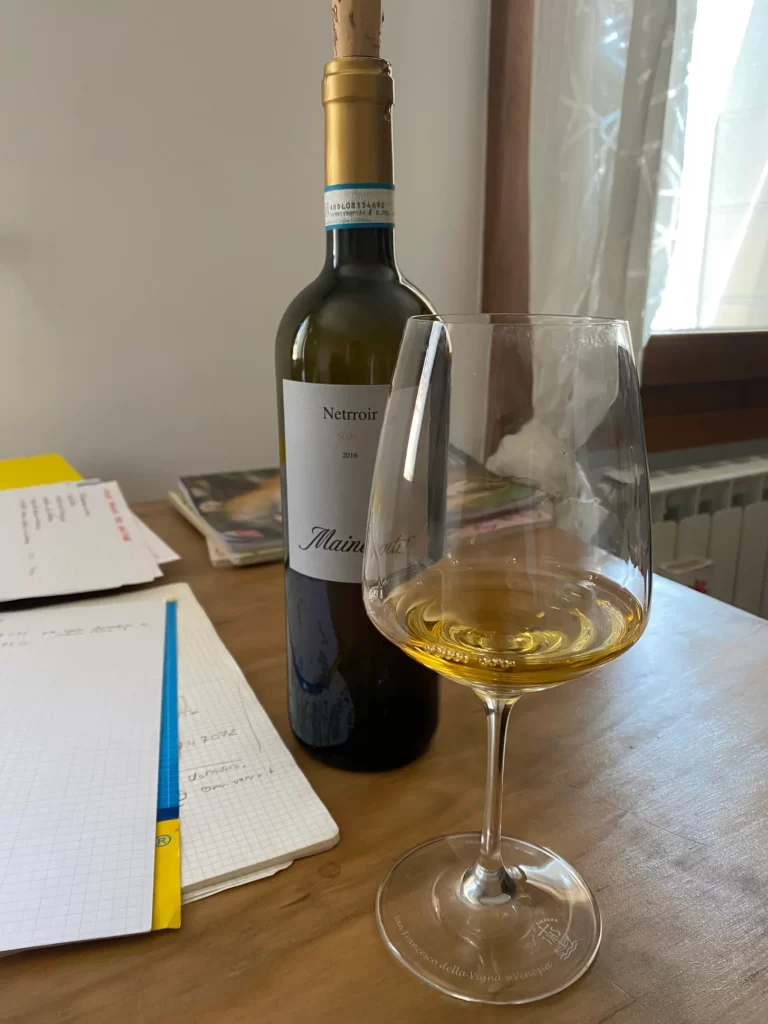
The first time I drank this wine, it was already incredibly golden. There is a significant amount of oak ageing on this wine for an Italian white.
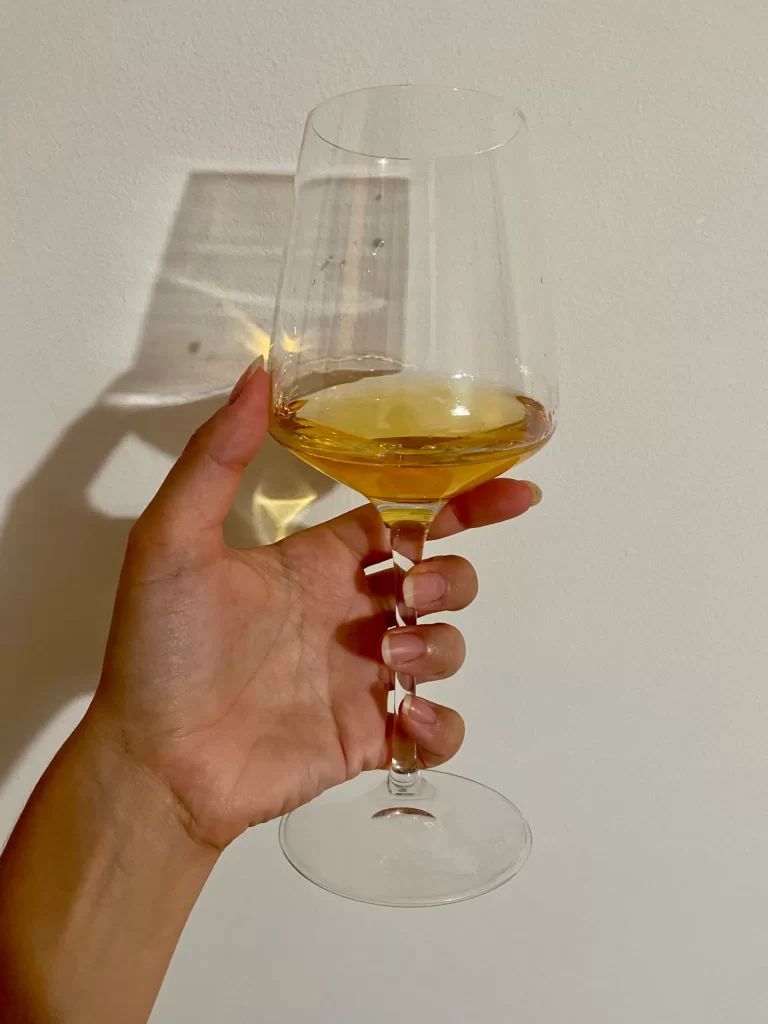
However, even in comparison to its initial colouring, the colour in the wine has deepened considerably. With red wines, it is typical to find colours deepening in the same way to produce brown, almost brick-like tints.
If you’re not convinced by the colouring just yet (and you never should be!), the next step is to check the cork.
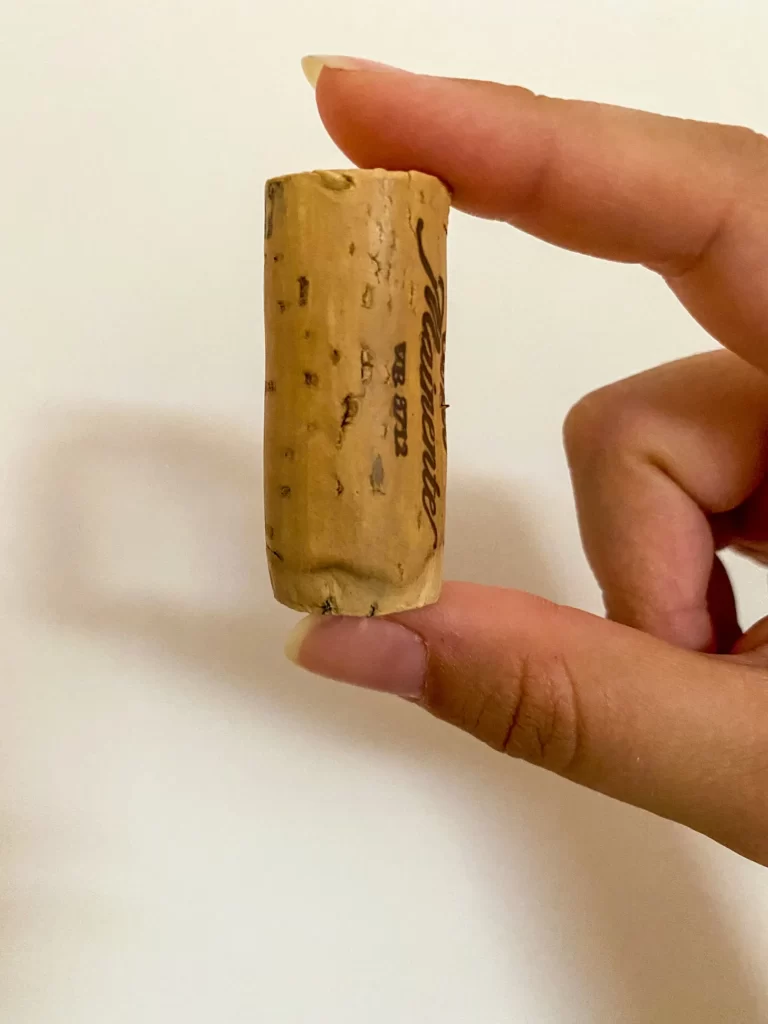
It’s become standard practice to smell a wine when opening it for the first time at a restaurant. What you’re looking for here, alongside the sommelier (or waitron) who opened the bottle and should’ve smelled the cork, is that typical ‘wet dog’ smell. However, this ‘corked’ element is not always very easy to pick up by sniffing the cork alone.
When examining the cork, aside from the smelling component, you should also check the base. It’s normal for the base of the cork to take on a little of the colour of the wine (especially with reds), however, when you start to get a leak into the body of the wine, it’s a clear sign that the wine has suffered from conditions in storage.
If you’re still not absolutely convinced, it’s time to tilt the glass back and check it out for yourself personally — with caution.
Here, whilst the colouring and cork had already turned me off considerably, I figured it was only good practice to go all the way. On lifting her to the nose, there are distinct aromas of cola and concentrated sugars – more signs to stop while I’m ahead. The smell is ‘sharp’, almost stinging the nostrils.
In terms of taste, however, she’s not as far gone. There is a heaviness about her, certainly, and she’s definitely more prone to bringing on headaches. She hasn’t quite reached the level of heat damage to produce jammy or sour flavours – but the presence of sugar here tells me that if left just a little bit longer, they would’ve been well on the way.
Upon coming to the end of your assessment and finding your wine undrinkable, you might ask yourself — what’s the point of all this? Do I now just throw the bottle out?
Absolutely not.
When wine suffers from heat damage, it’s generally referred to as ‘cooked’ – and with good reason; it’s perfect to use in recipes that require a bit of wine : risottos, braised meats, sauces.. the list goes on. You can also use it as a main ingredient in interesting desserts such as baked fruits, gelées and sorbets.